Car tyre pressure is crucial for safety, fuel efficiency, and driving comfort. Most cars require 32–36 PSI, but the correct level depends on the model, load, and weather. Underinflated tyres increase fuel consumption and wear poorly, while overinflated tyres reduce grip and ride quality. This guide explains the importance of maintaining correct tyre pressure, how to check it using a gauge or TPMS, the impact of temperature changes, and brand-specific recommendations for popular models like Maruti, Hyundai, Tata, Mahindra, and Honda. Regular checks help extend tyre life, improve handling, and reduce the risk of accidents.
Tyres may be just one of thousands of parts that keep a car running on the road. However, it’s fair to say that tyres aren’t the only thing that drives a car. From efficiency to safety, tyres impact almost every aspect of a car’s performance.
Maintaining the correct tyre pressure is crucial for overall tyre health. This blog explains how to determine the correct tyre pressure for your car, its importance, and the factors that affect it.
What is Tyre Pressure?
Car tyre pressure measures how much air is in your car’s tyres. Tyre pressure is measured in pounds per square inch (PSI) or kilopascals (kPa). Each car has its own specifications for pressure, but they generally fall between 32 and 35 PSI. The main benefit of correct tyre pressure is that it improves fuel efficiency, driving safety, and the longevity of your car’s tyres.
Why is correct tyre pressure important?
Regularly checking tyre pressure is essential for every car owner, as even properly inflated car tyres lose air over time. If your tyres are too low, they consume more fuel and wear out improperly. If your tyre pressure is too high, they ride rough and can burst. Incorrectly inflated tyres make it more difficult to control your car on the road. This reduces your ability to steer, corner, accelerate, and brake effectively.
Tyre pressure also changes with the weather. In cold weather, tyre pressure decreases, affecting their grip. When the weather warms, their pressure increases. Therefore, checking tyre pressure frequently is crucial for safety and performance. If you don’t maintain proper tyre pressure, you may experience the following problems:
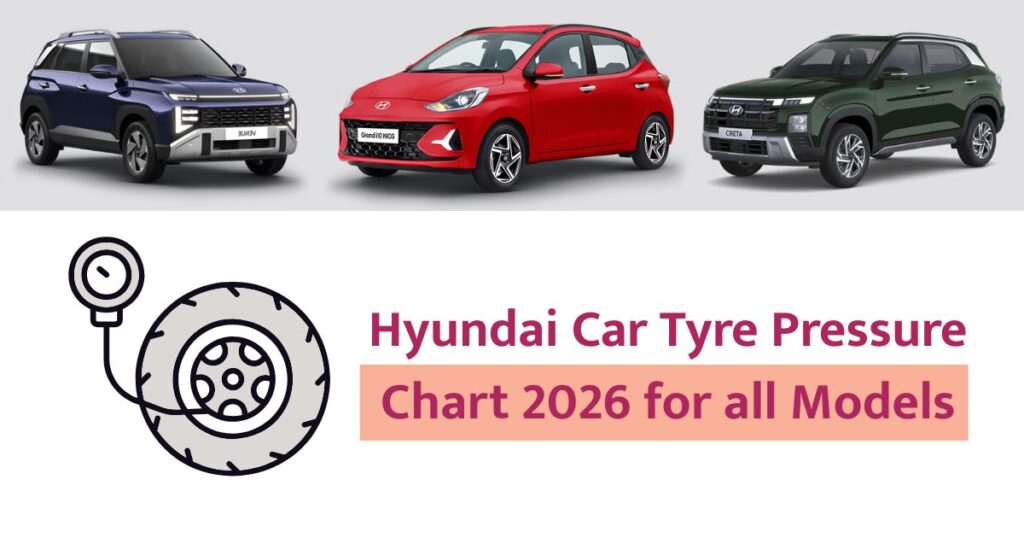
Hyundai Cars Tyre Pressure Chart (Front & Rear)
Here we are sharing with you the pressure inflation guide according to the model of Hyundai cars so that you can get an idea about how much PSI air you should keep in the car.
| Hyundai Model | Front Tyre Pressure (PSI) | Rear Tyre Pressure (PSI) |
|---|---|---|
| Hyundai i10 / Grand i10 | 33 PSI | 33 PSI |
| Hyundai i20 | 33 PSI | 31–33 PSI |
| Hyundai Venue | 33 PSI (normal) / 36 PSI (max-load) | 33 PSI (normal) / 35 PSI (max-load) |
| Hyundai Creta | 33 PSI | 33 PSI (normal) / 35 PSI (max-load) |
| Hyundai Alcazar | 33 PSI (normal load) / 35 PSI (max load) | 33 PSI (normal) / 35 PSI (max load) |
| Hyundai Verna / Elantra | 33 PSI (front & rear) | 33 PSI (front & rear) |
| Hyundai Grand i10 Nios / Xcent / Santro (older) | 33 PSI front & rear | 33 PSI front & rear |
Driving Without Insurance in India: Risks, Penalties & Why It’s Not Worth It
Hyundai Creta tyre pressure front and back?
Hyundai Creta tyre pressure is 33 PSI (normal) / 35 PSI (max-load)
Hyundai i20 tyre pressure front and back ?
Hyundai i20 tyre pressure Front 31 and Rear 31–33 PSI.
I10 tyre pressure front and rear?
I10 tyre pressure front and rear both 33 PSI
Hyundai i10 NIOS tyre pressure front and rear
Hyundai i10 NIOS tyre pressure front and rear both 33 PSI
Follow For More Updates Related Automobile news and Latest PR. Know about Car news & Bike news, launch updates and features. Stay Read WheelBuzz